Our TeamLocationsContact Us859.485.8500
  • Equipment
  • Rentals
  • Brands
  • Parts & Service
  • Financing
  • Media
Contact Us

859.485.8500

Careers

Privacy Policy

What we do

SANY

Morooka Carriers

Paint & Service

Parts

Attachments

Equipment

Rentals

Locations

Verona, Kentucky

Richwood, Kentucky

Saint Clairsville, Ohio

Apopka, Florida

Bartow, Florida

Stay Up To Date

Subscribe to our email list for our Daily Deals and to catch the latest news and best deals in the industry.

© 2026, Newman Tractor, LLC
Loading...
  1. Media
  2. Equipment Tutorials

What is a backhoe, and what's it used for?

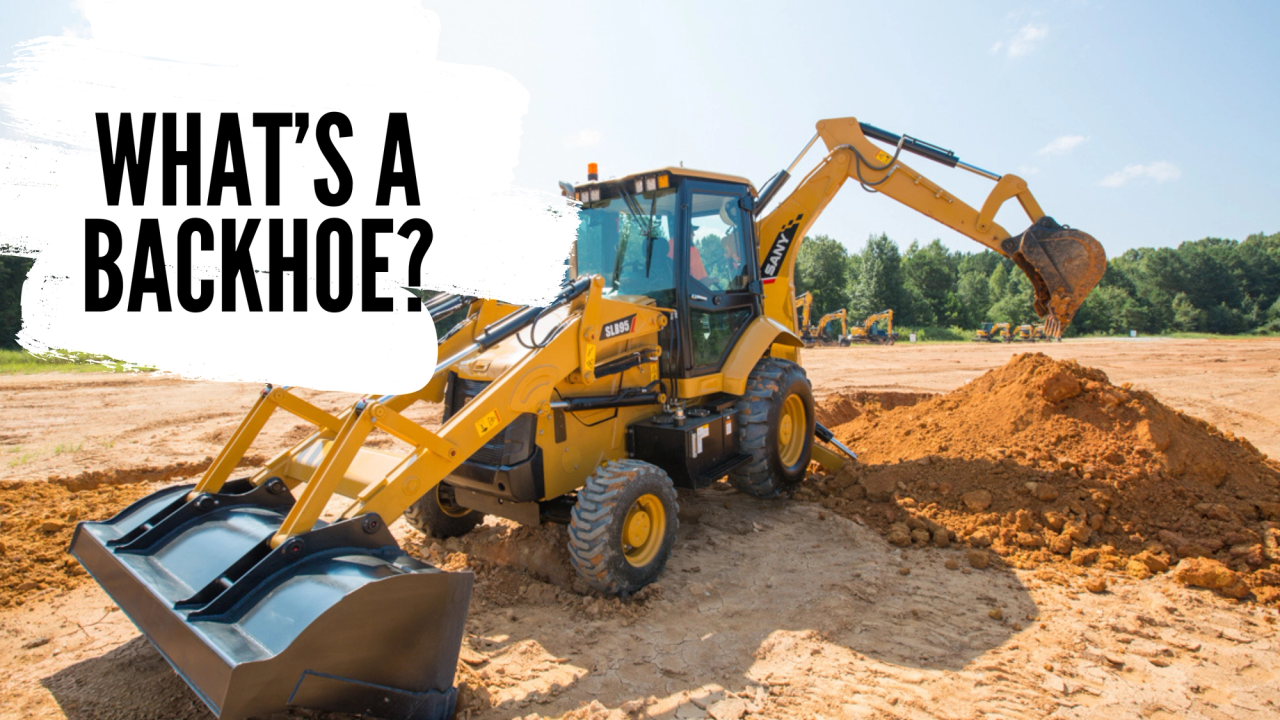
SANY SLB95 digging into dirt

Short answer: A backhoe is a two-in-one workhorse. Up front, it’s a loader for moving material. In the back, it’s an excavator for digging, trenching, and light demolition. Put both together, and you get a compact machine that does a lot of jobs well, which is why contractors, farmers, and landscapers buy backhoes.

Why people rely on backhoes

Backhoes do three things in one package: dig, lift, and load. That sweet spot makes them ideal for small crews and mixed jobs where you don’t want to haul two or three machines. If your work changes from job to job, a backhoe often gives more value per dollar than a single-purpose machine.

They work great for:

  • Digging footings and trenches
  • Breaking and removing small concrete or asphalt patches
  • Loading material into trucks or haul trailers
  • Clearing fence rows and light site prep
  • Utility work where you need a loader and a digger on the same machine

What does a backhoe look like?

Think of a backhoe loader in three parts:

  • Loader front end - bucket, linkage, and lift arms for moving dirt, rock, and material
  • Backhoe boom and stick - the digging arm that swings and reaches behind the machine
  • Carrier and stabilizers - chassis, wheels or tracks, and stabilizer legs that lock the machine in place for digging

Most backhoes use the loader as a counterweight while digging. Stabilizers drop to the ground, turning the machine into a steady digging platform. Controls typically consist of two joysticks for the backhoe and auxiliary levers or pedals for the loader.

Common backhoe attachments and what they do

Here are the attachment essentials you should be aware of. Start with the first three and add others as needed.

AttachmentWhat it does
Digging bucketsMultiple widths for general excavation and trenching
Trenching bucketsNarrow and deep for utilities and drainage lines
Hydraulic thumbPairs with a bucket to grab logs, rocks, and brush for cleanup
Auger driveBores post holes and tree holes quickly and cleanly
Hydraulic breakerBreaks small concrete and pavement for demolition work
Grapple bucketMoves brush and bulky debris without tipping the bucket
Pallet forksLoader-side attachment for moving palletized material
Ripper toothBreaks up compacted ground and rocky surfaces
Quick couplerSpeeds up attachment changes and reduces downtime

Backhoe uses by job type

Match the tool to the task. A few real-world examples:

  • For residential utility installs, use a trenching bucket for conduit, a backhoe for spoil pickup, and the loader to load trucks.
  • For small site development, use the loader for grading, the backhoe for footing excavation, and an auger for fence posts.
  • For farm and ranch work, use a hydraulic thumb and grapple to clear brush and the loader for feeding and hauling.
  • For rental fleets, a mid-size backhoe with forks, a thumb, and an auger covers the most requests.

Backhoe vs. mini excavator

The backhoe provides loader capability and enables faster truck loading. Mini excavator (https://www.newmantractor.com/news/mini-excavators-with-zero-tail-swing) wins for tight digs, deeper reach relative to its footprint, and for more precise trenching without moving the machine. If you need both a loader and a digger and don’t want two machines, buy a backhoe. If you’re mainly digging deep and narrow trenches, grab the mini.

SEE FULL COMPARISON

Operator tips that save time (and parts!)

Small changes in how you operate cut repair bills and speed work.

  • Set stabilizers fully before digging. It turns the machine into a stationary tool and reduces swing-gear stress.
  • Choose the smallest bucket that gets the job done. Smaller buckets cycle faster and reduce wasted passes.
  • Use loader counterweight where appropriate, but don’t depend on it for permanent ballast. Proper ballasting is safer.
  • Keep the boom low on travel. It reduces stress on pins and hoses and improves visibility.
  • Always check the load chart for depth and reach limits before lifting. Don’t guess.
  • Carry a grease gun and spare pins. A few minutes of lubrication saves hours of downtime.

Maintenance essentials and pre-shift checklist

Daily checks keep small problems from becoming big bills.

Daily

  • Check engine oil, coolant, and fuel level
  • Inspect hydraulic lines and look for leaks
  • Check tire pressure and wheel nuts, or track tension on tracked units
  • Grease pins and pivot points as recommended
  • Test lights, horn, and backup alarm

Weekly

  • Inspect bucket teeth and cutting edges
  • Check stabilizer pins and pads for wear
  • Inspect the air filter and clean if needed

Monthly

  • Check hydraulic filter indicators and replace filters as needed
  • Inspect fan belts and hoses
  • Test battery terminals and charging system

Seasonal

  • Change fluids per manufacturer’s schedule
  • Winterize fuel and batteries if cold storage is required

What to look for in a backhoe

A quick checklist when you shop for a backhoe:

  • Dig depth and reach that match the deepest work you expect
  • Loader lift capacity for the trucks and trailers you load
  • Powertrain and service access for local techs and parts availability
  • Hydraulic flow and auxiliary ports for the attachments you plan to run
  • Cab comfort and visibility for operators who spend long days in the seat
  • Resale value in your market and dealer support for parts and service

If you plan to build a fleet, standardize on one dealer and one platform. Fewer part numbers, simpler training, and faster repairs.

Ready to shop?

Backhoes specialize in small to medium earthwork. They won’t replace every machine on a big job, but for flexible crews and mixed work, they are hard to beat. If you’re unsure which backhoe size or attachments to buy, tell us about the jobs you run. We’ll recommend a setup that meets your needs and show you ownership costs so you can compare renting versus buying.

EQUIPMENT FOR SALE


Date: 01.23.2026
Topics: Equipment Tutorials
Tags:

Explore More Media

View All Post


Check out our equipment

  • Telehandler vs forklift: which machine is right for your job?
    Telehandler vs forklift: which machine is right for your job?

    If you’re weighing a telehandler vs. a forklift, you’re asking the right question. These two machines can look similar at a glance, but they solve very different problems. Picking … Read More

  • Kubota RTV Service Guide to Keep Your Side-by-Side Running Strong
    Kubota RTV Service Guide to Keep Your Side-by-Side Running Strong

    Is your Kubota RTV due for service? Regular maintenance is what keeps your machine reliable year after year. Here's our complete step-by-step guide to servicing your Kubota RTV so … Read More

Equipment Image
2024 INTERNATIONAL INTERNATIONAL HV607...

EQ10627

Price:
$170,001
Hours:
1174
Equipment Image
2024 KUBOTA KUBOTA SVL97-2HFC SKID...

EQ12064

Price:
$69,000
Hours:
573.04
Equipment Image
2023 KUBOTA KUBOTA RTV-X1140 UTILITY...

EQ10785

Price:
$13,500
Hours:
1121.5
Equipment Image
2019 SANY SANY SY265C EXCAVATOR

EQ1049

Price:
$139,000
Hours:
1564.1
Equipment Image
2006 CAT CAT D6N LGP CRAWLER PIPELAYER

EQ1273

Price:
$65,000
Hours:
5837.03
Equipment Image
2014 JOHN DEERE JOHN DEERE 850K LGP...

EQ2063

Price:
$115,000
Hours:
2304