Our TeamLocationsContact Us859.485.8500
  • Equipment
  • Rentals
  • Brands
  • Parts & Service
  • Financing
  • Media
Contact Us

859.485.8500

Careers

Privacy Policy

What we do

SANY

Morooka Carriers

Paint & Service

Parts

Attachments

Equipment

Rentals

Locations

Verona, Kentucky

Richwood, Kentucky

Saint Clairsville, Ohio

Apopka, Florida

Bartow, Florida

Stay Up To Date

Subscribe to our email list for our Daily Deals and to catch the latest news and best deals in the industry.

© 2026, Newman Tractor, LLC
Loading...
  1. Media
  2. Tips & Tricks

Types of Trailers for Hauling Heavy Equipment

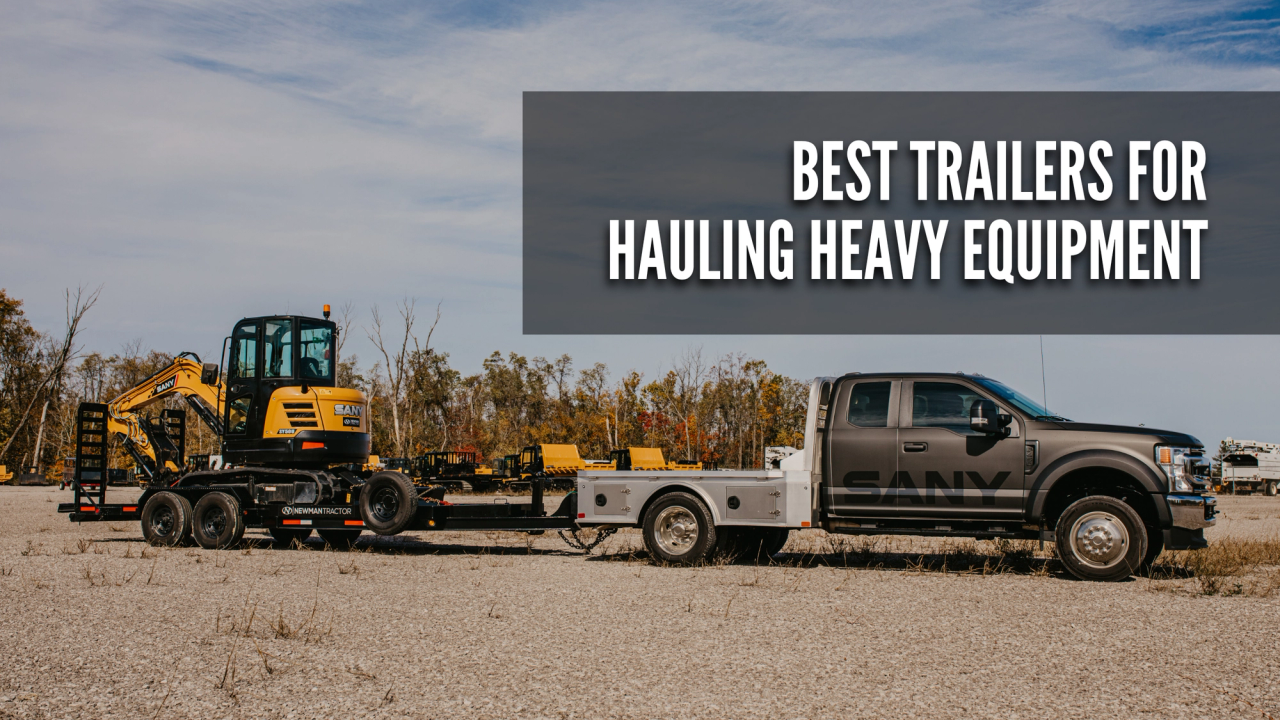
ford f450 hauling a mini excavator on a flatbed trailer

Transporting heavy equipment is sometimes an afterthought when it comes to purchasing machinery. But whether you're buying a mini excavator or a large-scale earthmover, the right trailer makes sure your equipment travels safely and complies with legal regulations (which vary from state to state, so check your local DOT regulations).

Disclaimer: To be clear, we’re not an authority about anything related to transportation. So, always check your local laws and regulations about this. All we can do is give our best suggestions and share what we’ve learned from years of industry experience.

Choosing an appropriate trailer means considering the size and weight of the equipment, as well as the capabilities of the towing vehicle. Additionally, the driver must have the correct commercial driver’s license (CDL) type to handle heavy loads legally and safely.

We’re not going to tell you how to live your life (or haul your equipment), so we’ll just share what we know about trailers and hope it’s helpful in your equipment-buying process!

Types of Trailers for
Heavy Equipment Hauling

Funny thing–you know how heavy equipment has multiple names depending on region and job site (for example, a skid steer, skid loader, and bobcat are all the same piece of equipment)? The same applies to trailers. So bear with us if you know these trailers by a different name.

Flatbed Trailers

Flatbed trailers are platforms without sides or roofs, making them ideal for carrying oversized goods or heavy machinery. They come in two styles: low-profile and deckover.

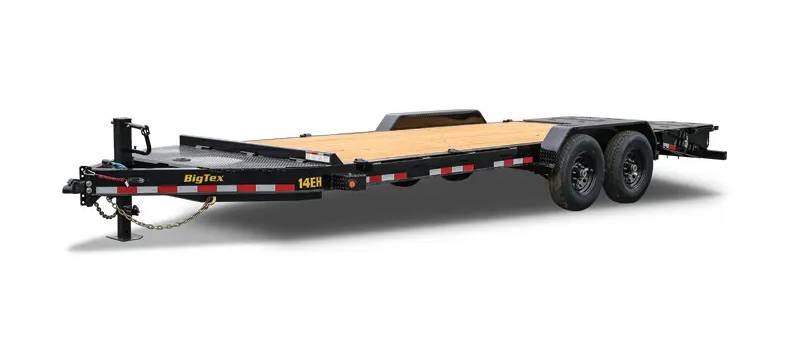
Low-Profile Flatbeds

big tex flatbed trailer
Image Source: BigTex

They’re loved for their versatility and ease of loading. Their open design lets you transport oversized or irregularly shaped goods like heavy equipment, construction materials, and machinery. Your machinery will need to fit within the wheel wells of the flatbed trailer.

“With a low profile, you're going to have less space between your tires compared to a Deckover. Most of them measure six feet nine inches in the wheel well, which should work for the majority of skid loaders, especially if they're on tracks or mini excavators. Occasionally, if you've got a bigger skid loader with a bigger bucket, you might run into an issue putting your bucket between the tires. However, you can always back it on and position yourself where your bucket would sit more behind them, avoiding the issue.” - Chad, Excavation Revelation

Ideal for Hauling: Construction machinery such as small excavators, backhoes, and skid steers. Flatbeds are also great for hauling long beams and steel materials.

Weight Capacity: 13,000 pounds

Deckover Flatbeds

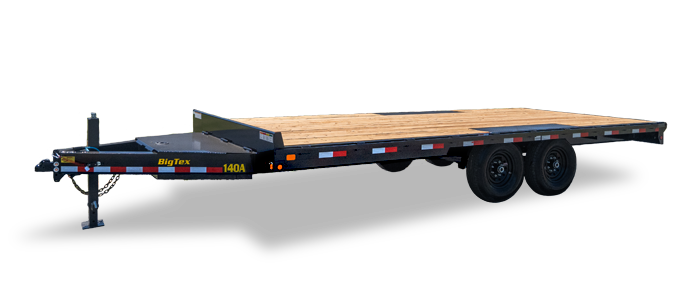
big tex 140a deckover trailer
Image Source: BigTex

Deckover trailers are known for their flat deck design, which extends over the wheels to provide a wide platform built for carrying large loads. This design feature maximizes the usable space on the trailer, allowing for the transportation of wide or irregularly shaped equipment that would not fit between the wheel wells of standard flatbed trailers.

Deckover trailers can potentially be loaded and unloaded from any side since the wheel wells don’t get in the way.

They come in bumper pull and gooseneck options. Sometimes, gooseneck deckovers are simply referred to as “gooseneck trailers,” but they aren’t the only trailer type with gooseneck options.

Ideal for Hauling: Large construction machines like backhoes, skid steers, and small to medium-sized excavators that may not fit between the wheel wells of standard flatbeds.

Weight Capacity: 16,000-48,000 pounds

Step Deck Trailers

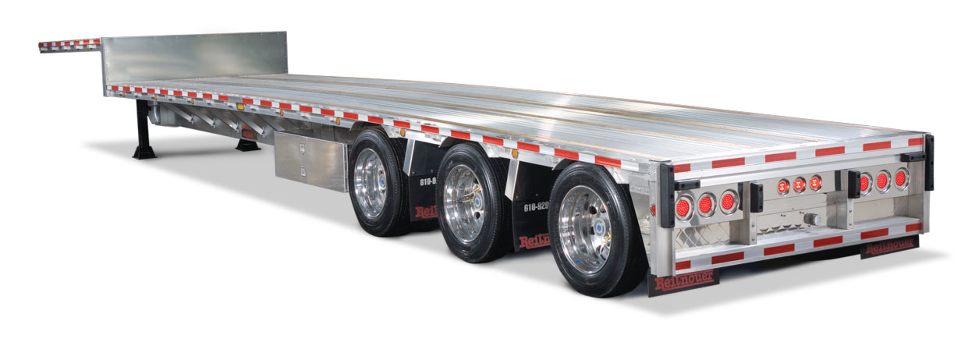
aluminum trailer for heavy equipment
Image Source: Reitnouer Aluminum Trailers

Step deck (or drop deck) trailers feature a top and bottom deck. The top deck is shorter and sits above the rear wheels, while the bottom deck extends from the back of the trailer and is closer to the ground. This design allows you to transport taller items that might not fit under standard bridge and overpass heights on a flatbed.

Ideal for Hauling: taller equipment like forklifts, telehandlers, and tall construction equipment that exceed the height limitations of flatbed trailers. It is also useful for machinery with attachments that add to the height, like cranes with raised arms.

Weight Capacity: 48,000 pounds, but more with additional axles

Double Drop Deck, Lowboy, and
Removable Gooseneck Trailers
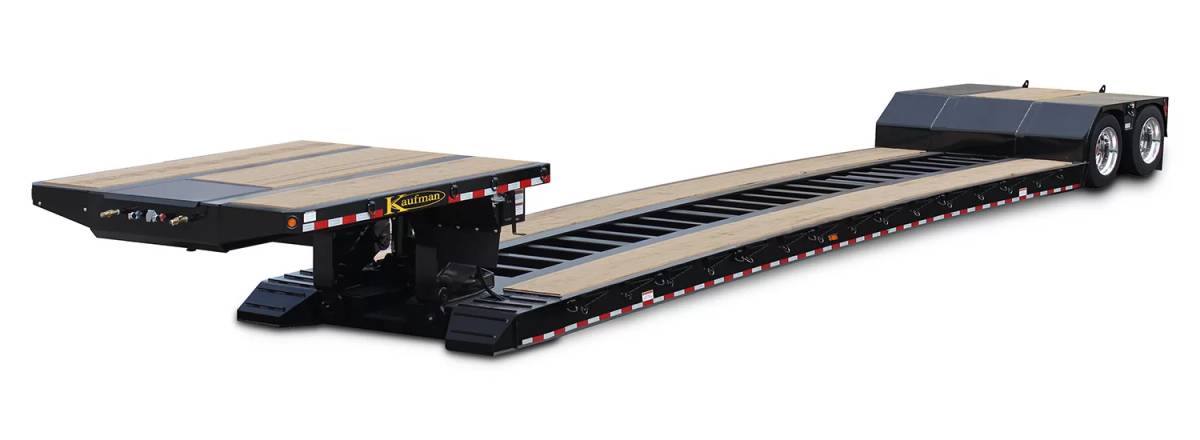
Kaufman Trailer
Image Source: Kaufman Trailers

The most distinctive feature of a double drop deck or lowboy trailer is its very low deck height, which is why it's called a "lowboy." This allows it to carry tall equipment and machinery within height limits for road transport, avoiding the need for special permits due to height.

Lowboy trailers feature a unique design with three distinct levels: the front deck (upper deck), the well (lower deck), and the rear deck. The "drop" in the center section allows for transporting taller items within legal height limits on roads.

Some double drop deck trailers come in extendable versions, allowing for transporting exceptionally long cargo while maintaining the benefits of a lower loading platform for tall items.

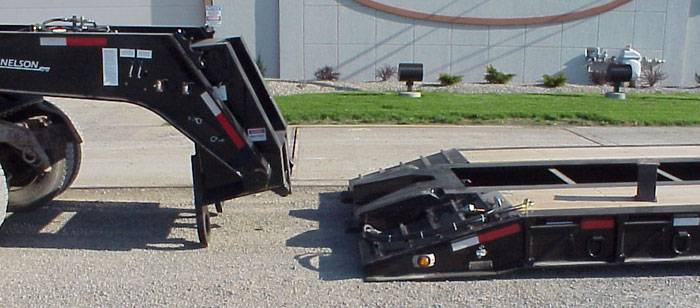
Here’s another curveball: If they do, in fact, have a removable gooseneck, they can also be called removable gooseneck trailers (RGN). Removable gooseneck trailers have a detachable front that lowers the deck to the ground, simplifying the loading and unloading of heavy equipment. RGNs are ideal for transporting very heavy items, such as large construction vehicles and industrial machinery. Some have a deck above the neck, and others do not.

Hydraulic removable gooseneck trailer with the neck detached
Image Source: Nelson Trailers

Ideal for Hauling: Due to their lower ground clearance, they are best for extremely heavy or tall equipment. They are commonly used to transport oversized excavators, large bulldozers, heavy-duty trucks, and any large industrial machinery that standard trailers cannot accommodate due to height or weight issues.

Weight Capacity: 45,000-150,000 pounds, more than 150,000 pounds on expandable RGNs

Landoll Traveling Axle Tilt Trailers

Landoll traveling axle trailer
Image Source: Landoll

The Landoll tilt trailers (or traveling axle trailers) are really unique. They have a hydraulic-powered axle that can travel from the front to the back of the trailer. When the axle is at the front, the bed of the trailer tilts so that it’s in a ramp position, and you can easily load heavy equipment.

Ideal for Hauling: Excavators, skid steers, wheel loaders, tractors, and other heavy equipment.

Weight Capacity: 50,000-110,000 pounds

Gooseneck vs. Bumper Pull

Some of the above smaller trailers have different ways to connect to the hauling vehicle. So sometimes, one of these trailers can be referred to simply as a gooseneck trailer, but it might actually be a deckover trailer with a gooseneck connection. This is another example of terms changing from region to job site.

Bumper Pull Trailers

Bumper pull trailers, sometimes called tagalongs, connect to a hitch located at the bumper level of a towing vehicle, making them a common choice for SUVs and trucks. Typically suited for lighter and less frequent hauling needs, they have a lower load capacity compared to goosenecks but offer greater versatility without significant vehicle modifications. These are great for hunters, farmers, landscapers, and motocross enthusiasts.

Weight Capacity: 39,000 pounds

Gooseneck Trailers

Gooseneck trailers have a hitching point mounted in the bed of a pickup truck over the rear axle. They’re great for hauling large construction machinery and multiple vehicles. These trailers require a pickup truck with a specially installed hitch, potentially adding to setup costs. These are the trailers you’ll see hauled by hotshot truckers.

Weight Capacity: 25,000 pounds

FeatureGooseneck TrailersBumper Pull TrailersRemovable Gooseneck Trailers
Hitching PointMounted in the bed of a pickup truck, over the rear axle.Attached at the bumper level of a towing vehicle.Detachable front allows for driving equipment onto the deck.
Load CapacityHigher load capacity, suitable for heavy-duty applications.Lower load capacity, suited for lighter, less frequent loads.Very high load capacity, ideal for very heavy equipment.
Vehicle RequirementRequires a pickup truck with a bed-mounted hitch, may involve additional setup costs.Compatible with a wide variety of vehicles equipped with a towing hitch; no special modifications needed.Requires heavy-duty towing vehicles and may need setup for the detachable mechanism.

Considerations When
Choosing a Trailer

Weight Capacity

  • Check the trailer’s weight capacity so it can safely carry the specific heavy machinery without risk of damage or legal issues. Overloading a trailer can lead to dangerous driving conditions, potential damage to the equipment, and legal penalties.
  • Compare the equipment's total weight to the trailer's maximum load capacity. Always allow for a margin for any additional attachments or cargo that might be added.

Size and Dimensions

  • The trailer's dimensions need to accommodate the length, width, and height of the equipment being hauled. Inadequate sizing can ultimately cause damage.
  • There needs to be enough space to secure the equipment, and it must not exceed the trailer’s boundary limits, which could violate transportation laws.

Towing Vehicle Requirements

  • The vehicle you need to tow with will depend on the trailer type and load. For instance, larger trailers like lowboys and double drop decks generally require semi-trucks due to their weight and size needs.
  • Verify that the towing vehicle has adequate towing capacity, engine strength, and braking capability to handle the weight and characteristics of the loaded trailer.

Legal Requirements

Depending on the size and weight of the load, special transportation permits may be required by state or local laws. So, here’s a friendly reminder to check with local transportation authorities to get the specific legal requirements, such as maximum load limits, escort needs for oversized loads, and any other rules and regulations you’ll need to follow.

Safety Tips for Hauling
Heavy Equipment

Best Practices for Loading and Securing Equipment on Trailers

  • Always ensure the equipment is centered on the trailer for balance and prevent shifting. Use loading ramps that can handle the weight of the equipment, and make sure the equipment is driven onto the trailer slowly and steadily.
  • Distribute the weight evenly across the trailer to avoid overloading an axle.
  • Use chains, straps, and binders rated for the equipment's weight. Secure equipment at multiple points, ideally at designated tie-down spots, so it can’t move during transport. After the initial few miles of travel, stop to check and tighten the bindings, as they may loosen.

Routine Checks and Maintenance Tips for Trailers

  • Before every trip, conduct a thorough inspection of the trailer. Check for signs of wear or damage, particularly to the frame, axles, and tires. Test all lights and signals.
  • Regularly check trailer tires for proper inflation and wear.
  • Check brake pads, fluid levels, and connections, if applicable.
  • Keep all moving parts (like hinges and couplers) well-lubricated to prevent rust and ensure smooth operation.
  • Regularly clean the trailer to prevent the buildup of dirt and grime, which can hide potential issues or cause corrosion.

Ready to Haul?

Whether you need a gooseneck for stability, a removable gooseneck for heavy loads, or a versatile bumper pull, selecting the appropriate trailer ensures compliance and safety on the road. Not sure which trailer suits your needs? Our team is here to help. We don’t sell trailers, but we’re happy to help arrange transport or work with local dealers to find the best trailer for your specific requirements.

Contact Us

Trailer TypeIdeal for HaulingVehicle RequirementWeight Capacity
Low-Profile FlatbedsSmall excavators, backhoes, skid steersPickup trucks or larger towing vehiclesUp to 13,000 pounds
Deckover Flatbeds (including Gooseneck and Bumper Pull options)Large construction machines like backhoes, skid steers, medium-sized excavatorsHeavy-duty pickups or semi-trucks for larger loads16,000-48,000 pounds
Step Deck (Drop Deck) TrailersTaller equipment like forklifts, telehandlers, and tall construction equipment with attachmentsHeavy-duty pickups and semi-trucksUp to 48,000 pounds, more with additional axles
Double Drop Deck, Lowboy, and Removable Gooseneck Trailers (RGN)Extremely heavy or tall equipment like oversized excavators, large bulldozers, heavy-duty trucksSpecialized heavy-duty towing vehicles, semi-trucks45,000-150,000 pounds, more than 150,000 pounds on expandable RGNs
Landoll Traveling Axle Tilt TrailersExcavators, skid steers, wheel loaders, tractors, and other heavy equipmentSpecialized towing vehicles with capacity for high weights50,000-110,000 pounds

Date: 12.03.2024
Topics: Tips & Tricks, Equipment Tutorials
Tags:

Explore More Media

View All Post


Check out our equipment

  • Telehandler vs forklift: which machine is right for your job?
    Telehandler vs forklift: which machine is right for your job?

    If you’re weighing a telehandler vs. a forklift, you’re asking the right question. These two machines can look similar at a glance, but they solve very different problems. Picking … Read More

  • Kubota RTV Service Guide to Keep Your Side-by-Side Running Strong
    Kubota RTV Service Guide to Keep Your Side-by-Side Running Strong

    Is your Kubota RTV due for service? Regular maintenance is what keeps your machine reliable year after year. Here's our complete step-by-step guide to servicing your Kubota RTV so … Read More

Equipment Image
2024 INTERNATIONAL INTERNATIONAL HV607...

EQ10627

Price:
$170,001
Hours:
1174
Equipment Image
2024 KUBOTA KUBOTA SVL97-2HFC SKID...

EQ12064

Price:
$69,000
Hours:
573.04
Equipment Image
2023 KUBOTA KUBOTA RTV-X1140 UTILITY...

EQ10785

Price:
$13,500
Hours:
1121.5
Equipment Image
2019 SANY SANY SY265C EXCAVATOR

EQ1049

Price:
$139,000
Hours:
1564.1
Equipment Image
2006 CAT CAT D6N LGP CRAWLER PIPELAYER

EQ1273

Price:
$65,000
Hours:
5837.03
Equipment Image
2014 JOHN DEERE JOHN DEERE 850K LGP...

EQ2063

Price:
$115,000
Hours:
2304